



Access to proton treatment often depends on many variables beyond clinical eligibility. Patient navigators play a critical role in helping patients overcome insurance barriers, coordinate complex care, and feel supported during one of the most difficult periods of their lives.
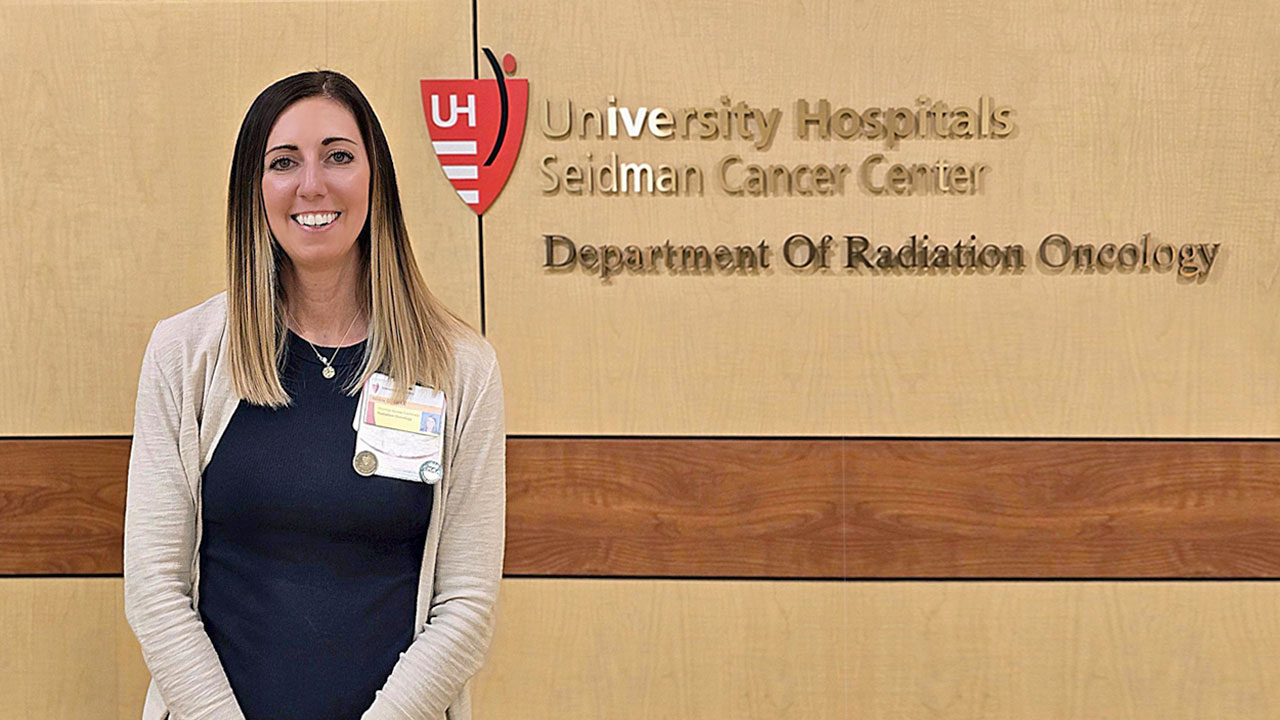
As a patient navigator at UH Seidman Cancer Center Nicole Gebhardt has a deep understanding of what patients are going through. A childhood cancer survivor herself, coupled with a strong understanding of insurance policies and approvals from previous roles at the hospital, makes her an ideal fit to help patients through one of the most difficult times of their lives.
“I have that compassion and empathy for those patients,” she said. “I know what my parents went through. I always wanted to give back to people.”
For one patient at the UH Proton Therapy Center (part of the UH Seidman Cancer Center), treatment may not have been possible if it weren’t for Gebhardt, one of many patient navigators who make a crucial difference in the lives of patients every day.
A woman from West Virginia called seeking treatment for her mother, who was diagnosed with left-sided breast cancer and a long history of lung disease, Gebhardt felt a strong need to help. An out-of-state patient isn’t uncommon for Gebhardt to see, and depending on their insurance, it can be fairly simple or quite tough to get approval.
“I asked her about insurance, she said, ‘West Virginia Medicaid.’ My heart sank a little, I knew how difficult it can be to get approval for out-of-state proton therapy with Medicaid,” Gebhardt said.
UH Seidman was the closest center to the patient in West Virginia, and there aren’t any in-state. This was likely her best shot at receiving proton therapy treatment, even with the obstacles ahead. Although she was an ideal clinical candidate, the patient’s insurance would likely deny the treatment since it is out-of-state. Gebhardt brought the case to her leadership, and they agreed to work with the patient and her insurance to gain approval.
Gebhardt registered her on the insurance’s prior authorization portal, submitted the request and to her relief, obtained an approval. She also helped her get set up to stay at the local American Cancer Society Hope Lodge for her treatment that is a unique resource for patients at the UH Proton Therapy Center. And a few weeks later, Gebhardt knew the hard work had paid off.
“She called me in tears, this time, happy tears,” Gebhardt said. “She had just gotten her first scan and was declared cancer free. She was beyond grateful. Moments like that remind me why this work matters. We didn’t just get her approved for treatment; we gave her hope, dignity, and the chance at a healthier future.”
Gebhardt’s advice for fellow patient navigators and proton therapy administrators is simple – never give up. Insurance approvals can be complicated and time-consuming. But on the other side could be a patient who is able to get treatment.
“I always say to push forward, because you never know how far you can take an approval,” she said. “Be persistent because sometimes that can really change the outcome of someone’s life.”